
Lithomancy: What Is It, and How Do You Interpret the Messages from Crystals?


For thousands of years, stones and crystals have held a special place in spiritual and symbolic practices.
People collect them, wear them, and use them as objects for meditation or as tools for introspection. But did you know that there’s also a divination practice that involves using stones to receive messages and shed light on certain situations?
This practice has a name: lithomancy. As someone passionate about crystals and symbols, it was only natural that I began incorporating this divinatory art into my daily life and my work.
What is lithomancy?
The term “lithomancy” comes from the Greek lithos, meaning “stone,” and manteia, meaning “divination.” It therefore refers to a form of divination that uses stones as a medium.
Contrary to what one might imagine, there is no single, universal way to practice lithomancy. Each practitioner can develop their own method, their own symbolic system, and their own personal way of interpreting the stones.
Some people use stones associated with a particular meaning, while others focus on their properties, their position, or the first impression they get when drawing them.
Lithomancy and Lithotherapy: What’s the Difference?
You’re probably familiar with lithotherapy? More widely known, it’s often associated with lithomancy, particularly because both use stones. However, their objectives aren’t exactly the same.
Lithotherapy is a practice that uses stones and crystals to promote well-being, personal growth, and energetic balance. It’s based on the idea that each stone possesses specific properties that can support certain emotions, intentions, or life stages.
Lithomancy, on the other hand, uses stones as a tool for divination and interpretation.
Therefore, we do not necessarily choose a stone because it has a specific property, but rather for the story it will tell us. It is precisely the randomness of the draw that allows a specific symbol, reflection, or message to emerge.
How does a lithomancy reading work?
A reading can be conducted using various methods.
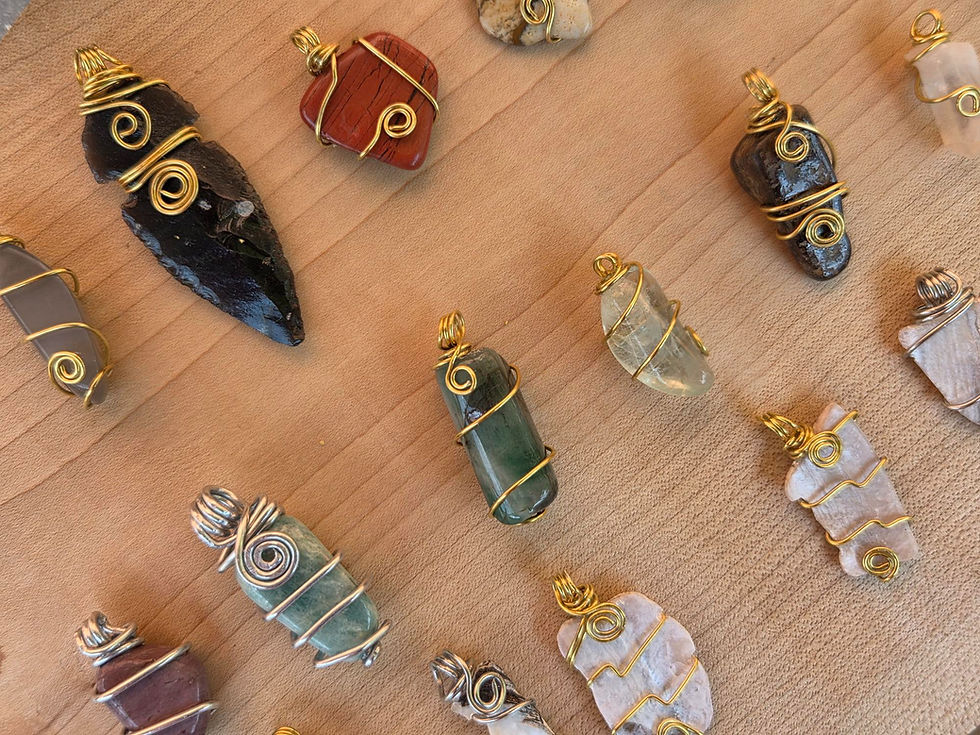
Before each session, I begin by selecting my stones: different shapes, colors, sizes, and energies. For me, each one has a specific symbolism, meaning, or purpose.
A well-known method in lithomancy is to scatter the stones on a mat. Personally, I prefer to lay them out in front of the person so they can choose one.
During a session, I ask four questions:
1. Which stone immediately caught your attention? (This one will reveal the energy of the present moment.)
2. Which stone represents your strength—what you already have within you?
3. Which stone represents a limitation—an area you need to work on right now?
4. What energy are you moving toward? What kind of growth is coming your way?
Once the selection is complete, that’s when the magic happens. We let the stones reveal their messages to us. Even before the stones, I’d say to listen to your intuition, your body, or your feelings. The messages may come quickly, or they may be calmer and deeper than mere words.
The stones support processes of release, understanding, or personal growth.
I believe that the moment we receive a message that contributes to a profound inner change is the moment we were finally ready to let it go—whether that message is beautiful or painful.
How to Interpret the Stones?
The first step is to observe the stone itself: its color, shape, appearance, and how it catches the light.
Next, ask yourself what this stone evokes for you.
These associations can vary from person to person. Listen to your first instinct—it will guide you.
Let’s take an example: You choose a small, pale pink rose quartz stone with a round shape. Rose quartz is associated with self-love and love for others, tenderness, softness, and emotional soothing. Its round shape, on the other hand, can evoke a gentle, enveloping, and fluid energy, inviting things to emerge naturally rather than being forced. On the other hand, if you choose a pointed labradorite, its shape may suggest a more focused energy, as if something is seeking to be directed toward a specific area or transformed. Labradorite being particularly associated with protection and transformation, this can offer a different interpretation. The color, size, shape, but also the way you feel drawn to a particular stone, are all elements that can enrich its interpretation. For example, black onyx can evoke grounding, stability, and protection, while a stone with softer tones, such as aquamarine or moonstone, may bring forward themes of calm, comfort, or emotional openness.
The Role of Intuition
One of the most fascinating aspects of lithomancy is the role intuition plays. When you draw a stone, note the first thought, image, or sensation that comes to mind before looking up its meaning in a book.
Why this stone rather than another? What does it remind you of? Does it attract you or make you feel uncomfortable?
The stone can then act as a mirror, shedding light on something you already sensed but couldn’t quite put into words.
How to Get Started with Lithomancy at Home?
You can use stones you already own and with which you feel a special connection. Before drawing a stone, take a few moments to center yourself and think about the question you want to ask.
A good question is usually open-ended. Rather than asking, “Am I going to change jobs?” you can ask, “What do I need to understand about my professional situation?”
Start with simple, clear questions: the reading then becomes a tool for reflection rather than a simple search for a “yes” or “no” answer.
Next, place the stones in a bag or in front of you and let yourself be guided.
You don’t need an impressive collection: five to seven different stones are enough. Choose them based on their colors, shapes, or intuitively. The important thing is that you feel drawn to them.
Start with a very simple reading using three stones:
The first: what is currently with me.
The second: what I need to understand.
The third: the energy I can move toward.
Observe each stone before looking up its meaning. In a notebook, jot down whatever comes to mind, then compare it with the symbolism you’re familiar with.
Over time, you’ll develop your own symbolic language, and your interpretations will become increasingly precise.
Lithomancy: A Tool for Introspection
Beyond its divinatory aspect, lithomancy can above all be an invitation to slow down.
We often seek answers immediately: “What should I do?”, “Is this the right choice?”, “What’s going to happen?” We can use stones to observe our current situation, listen to our intuition, and bring new perspectives to light.
Lithomancy then becomes less a way to predict the future and more a way to engage in dialogue with oneself. The stones become symbolic tools, and the true message can sometimes be found in what their presence stirs within us.
Lithomancy is a simple, intuitive, and personal practice. You don’t need to know all the meanings of the stones or own a large collection.


Comments